

Air conditioning doesn’t make you sick on its own, but a dirty or poorly maintained system can circulate dust, mould spores, pet dander and bacteria that trigger cold-like symptoms in people who are sensitive to them. Because air conditioners recirculate the air already inside a room rather than bringing in fresh air, anything in that air keeps going around. The symptoms are real; the cause is what the system is spreading, not the system itself.
If you feel congested, headachy, or run-down at home and fine as soon as you leave, it’s worth checking your air conditioner. Below is what’s actually happening, which symptoms point to it, and what to do about it.
How Does Air Conditioning Affect Indoor Air Quality?
Standard split-system and ducted air conditioners recirculate indoor air rather than drawing in fresh air from outside. They cool and filter what’s already in the room and send it back out, so the same dust, dander, and spores pass through the system repeatedly.
That’s fine when the system is clean. A well-maintained filter captures most airborne particles, and the air gets better, not worse. The problem starts when the filter is clogged, or when moisture inside the unit lets mould or bacteria establish on the filter or coil. At that point, the air conditioner stops removing pollutants and starts distributing them.
What people call “air conditioning sickness” isn’t a formal medical diagnosis, and it’s usually tied to ventilation, humidity and indoor air quality rather than any single cause.
What Are the Symptoms of Air Conditioning Sickness?
The symptoms of air conditioning sickness vary widely, but the most common are a stuffy, runny or blocked nose, sore throat, headaches, fatigue, dry or irritated skin and difficulty breathing. They typically resemble a mild cold or flu, and their severity depends on what’s in the air and whether you have existing allergies or asthma.
- Stuffy, runny or blocked nose
- Difficulty breathing
- Headaches
- Fatigue
- Dry and irritated skin
- Sore throat
How Do You Know If Your Air Conditioner is Causing Your Symptoms?
One of the biggest giveaways that you’re suffering from air conditioning sickness is how often the symptoms occur. Most people only feel sick while they’re indoors using their air conditioner. Once they’re out of the house and away from home, the symptoms quickly clear up. If you notice a pattern of sickness that only occurs when you’re at home or using your air conditioner, it’s time to look into air conditioning maintenance services.
Other patterns worth noticing: symptoms that started after a long period with the system switched off, symptoms that affect several people in the household at once, or a musty smell when the unit first starts up.

When Should You See a Doctor?
How to Avoid Air Conditioning Sickness
Clean or replace the air conditioner’s filter, keep indoor humidity between 40% and 60%, book a professional service to clean the internal components, and deal with any mould or damp in the house itself. In most cases, the filter is the fix.
-
Clean the filter regularly.
Most split system filters are designed to be removed and cleaned by the owner, and they need doing every few weeks during heavy use, not once a year at a service. Slide the filter out, rinse it, let it dry completely and put it back. A visibly grey or furred filter is already affecting both your air quality and your running costs.
-
Keeping your spaces clean.
Air conditioners work by circulating and conditioning the air that’s already in a room. While the system includes a filter that deals with most pollutants, maintaining a clean home goes a long way to improving air quality. Make sure you’re regularly mopping floors, wiping down dusty surfaces and vacuuming carpets.
-
Managing humidity levels.
The presence of bacteria and mould are the main culprits of air conditioning sickness. These microorganisms thrive in humid environments. Likewise, air conditioners gradually remove moisture from the air, and low humidity levels are a common cause of dry skin which amplifies the symptoms of air conditioning sickness. Do your best to keep your home at a nice middle ground that won’t cause either of these issues.
-
Servicing your air conditioner regularly.
All ducted reverse cycle air conditioning and split system air conditioners contain an air filter. This filter does a great job of removing particles of dust from the air, so it needs to be cleaned frequently. As part of your regular maintenance schedule, your air conditioning technician will clean the filter and remove any built up pollutants. If you use evaporative air conditioning in Adelaide, regular servicing is just as important to keep air quality high and your system running efficiently.

Is it Time to Service Your Air Conditioning? Contact Air Conditioning Doctor Today!
Air conditioners don’t cause sickness. While they can contribute to spreading dust and bacteria, they aren’t directly responsible for the symptoms you’re experiencing. But, if you are struggling with cold or flu symptoms when you spend time indoors, it’s time to call the Air Conditioning Doctor. We’re a team of experienced technicians performing air conditioner repairs in Adelaide.
We offer a comprehensive range of air conditioning maintenance, repairs and servicing to suit all major brands. As part of our regular maintenance plans, we can keep your air conditioner sparkling clean and help look after your family’s health. Contact us online and make an appointment if you’re concerned about the air quality in your home – we’re always ready to help!
Frequently asked questions
Can a dirty air conditioner filter make you sick?
A clogged filter stops trapping particles and can harbour mould and bacteria, so it circulates dust, spores and dander instead of removing them. For people with asthma or allergies this is enough to trigger symptoms.
Can air conditioning give you Legionnaires’ disease?
Not from a domestic split system or ducted air conditioner. Legionnaires’ disease is associated with large cooling towers and warm-water systems that spray water into the air as a fine mist, which household air conditioners don’t do.
Why do I get a sore throat from air conditioning?
Usually dryness rather than contamination. Refrigerated air conditioning removes moisture from the air as it cools, and prolonged exposure to dry air irritates the throat, nose and eyes.
Does air conditioning cause colds?
No. Colds are caused by viruses. Air conditioning can produce cold-like symptoms through irritants and dry air, which is why the two get confused, but it can’t give you an infection.
How often should an air conditioner be serviced?
We recommend servicing at least once a year. Clean the filter yourself every few weeks during heavy use, regardless of when the last service was.
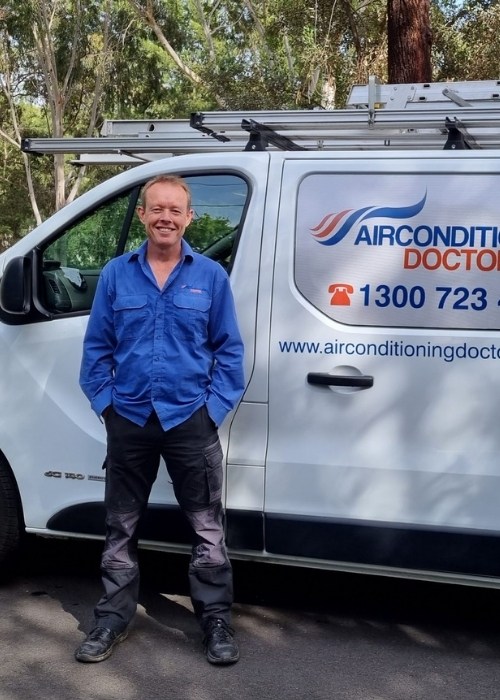
Stephen Maitland is the Director of Air Conditioning Doctor and has over 20 years of experience in the refrigeration and air conditioning industry. He founded the company in 2007 to be Adelaide’s leading air conditioning repair, replacement and installation specialist.
As a certified Refrigeration Mechanic with a full unrestricted ARC license, his technical knowledge and years of experience allow him to diagnose problems quickly and offer practical and efficient solutions for his customers.
