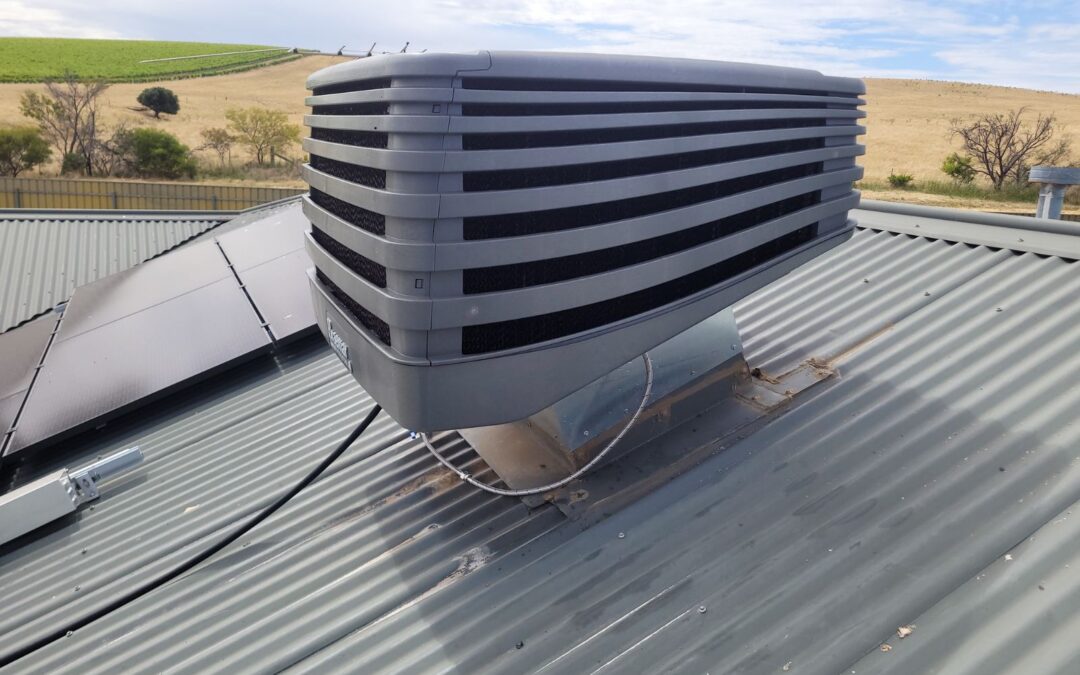
When it comes to evaporative coolers, bigger isn’t always better, and the right size system depends on a number of factors, from your home’s layout to how many people live there. But when you start getting quotes and talking to installers, you’ll probably start hearing them talk about 250 litre-per-second units while you nod along wondering what that actually means.
Here at Air Conditioning Doctor, we don’t want to mystify the process and leave you wondering what you’re paying for. We want to help you understand what size evaporative cooler you need without the jargon. There’s no single number that tells you exactly what size you need — that’s what a good installer is for — but we want to help you walk into that conversation with enough knowledge to ask the right questions, understand the answers, and feel genuinely confident in whatever gets recommended.
The Myth of “Bigger Is Better”
If a bigger unit cools more, why not just go big and be done with it? We’ve been asked this question more times than we can count, so let’s put the final word on it here.
Evaporative cooling doesn’t work like a refrigerator you can just turn up or down. It works by pushing a continuous flow of fresh, moisture-cooled air through your home, and the system needs to be matched to your space so it can cycle air at the right rate.
Too small, and the unit runs flat-out on those hot summer days, struggling to keep up and chewing through electricity without you feeling much cooler.
Too large, and you’ve overspent on a unit that cycles air so fast it doesn’t have time to actually cool the space properly. You can also end up with uncomfortable humidity and draughts in the rooms closest to the outlets.
A well-sized system hums along efficiently, maintains a comfortable temperature, and doesn’t cost you a fortune to run. That’s our goal when we quote for the right unit size.
Understanding How Evaporative Cooler Size Is Measured
Evaporative cooler sizing isn’t something that can be reduced to a single formula or figure. The right size depends on how your home’s layout, ceiling height, insulation, and exposure to heat.
When you start looking at evaporative coolers, you’ll notice that different brands talk about size in different ways. Some use litres per second, others refer to cubic metres per hour, air changes per hour, or even cooling capacity in kilowatts. It can feel like you’re comparing apples to oranges. At their core, though, all of these measurements are trying to describe the same thing: how much air the system can move through your home, and how quickly it can replace it with fresh, cooled air.
Rather than getting caught up in the specific units, it’s more useful to understand what you’re aiming for. A well-sized evaporative system should be able to continuously push enough fresh air through your home to keep temperatures comfortable, even on hot days, without feeling draughty or humid.
A good installer will translate all of those variables into a system recommendation, regardless of which measurement system the manufacturer uses.
What a Good Installer Will Factor In
Here’s where you usually see the difference between a careful installer and a lazy one. Two homes with the same floor area can need very different systems once these factors are taken into account.
Your Home’s Layout and Construction
Open-plan homes distribute airflow differently to homes with lots of separate rooms and hallways. Older Adelaide homes, particularly those built before 1980, often have higher ceilings, minimal roof insulation, and different wall construction, all of which affect how hard the system has to work.
A decent installer will want to know whether you have insulation, what condition it’s in, and what your roof space looks like. We’re not being fussy when we ask these questions. They help us determine how well your unit will cope with a sunny afternoon.
Sun Exposure and Orientation
A north or west-facing home in Adelaide absorbs significantly more heat load through summer than a well-shaded south-facing property. If your main living areas face west and you have large windows, that might increase the required capacity.
Outlet Placement and Airflow Path
Evaporative cooling relies on a continuous flow of fresh air through the home. It works by drawing in outside air, cooling it through water-saturated pads, and pushing that cooled air indoors while existing indoor air is relieved out through open windows or doors. The air that comes in through the roof unit needs somewhere to escape, usually through open windows or doors in the rooms you’re trying to cool. If your home’s layout makes that path awkward, it affects performance regardless of unit size.
Number of People Using the Space
People generate heat. A full family home has different cooling needs to one with a single occupant or a couple. It doesn’t have as big an impact as the structure and layout of your home, but it’s still worth taking into consideration.
Adelaide-Specific Considerations
Evaporative cooling works on the principle of moisture evaporating into dry air, which is exactly why it’s so effective in our dry climate.
That said, a few local factors are worth keeping in mind:
- Extreme heat days (40°C+) aren’t uncommon in Adelaide, and this is when sizing margins really matter. A unit that’s just barely adequate on a 35-degree day will struggle badly at higher temperatures.
- Many older Adelaide homes have high ceilings (particularly in the inner suburbs), which significantly increases the volume calculation.
- Hills suburbs can see different humidity levels to metro Adelaide, which can affect how efficiently the system performs.
- Coastal areas experience slightly higher ambient humidity, which can reduce evaporative effectiveness on muggy days.
All of these are reasons to make sure the sizing conversation takes your specific location and home into account.

Red Flags to Watch For When Getting Quotes
You don’t need to become an expert to spot when a quote hasn’t had much thought put into it. A few things worth paying attention to:
A recommendation given without a site visit.
Sizing an evaporative system properly requires someone to actually see your home. A quote based purely on your rough floor area over the phone is just a guess and is likely to change.
No questions about your ceiling height, insulation, or layout.
If the installer hasn’t asked about any of these, they haven’t done the full calculation. You can ask them directly: “What factors are you basing this recommendation on?” A good installer will have a clear answer.
An instant recommendation for the largest available unit “just to be safe.”
This isn’t necessarily dishonest, but it’s worth asking why. Oversizing costs more upfront and doesn’t always perform better.
A recommendation that seems unusually small with no explanation.
The reverse is also true. If the number seems low for your home, ask for the reasoning. You want to understand it, not just accept it.
A solid recommendation should come with a clear explanation. If your installer can’t tell you why they’ve chosen a particular unit, that’s worth questioning.
Going Into Your Quote Prepared
You don’t need to walk in with a spreadsheet. But knowing a few things ahead of your consultation will help the conversation go further, faster:
- Your home’s approximate floor area (a rough figure is fine)
- Your ceiling height (standard 2.4m, or higher in older or architect-designed homes)
- Whether you have roof insulation, and how old it is
- Which direction your main living areas face
- Any areas of the home that already run noticeably hotter
Hand that information to a good installer and you’ll get a much more precise recommendation.
Get the Right Size System For Your Home
Now that you’ve got an idea of what to expect and how to understand your quote, it’s time to reach out to the experts. Knowing the rough size to get based on your home is only part of the story, and professional installers like us can fill in the rest.
At Air Conditioning Doctor, we’ve been doing this in Adelaide for over 20 years. When we recommend a unit size, we explain the reasoning, because a customer who understands what they’re buying is a customer who’s happy with it long-term.
If you’re ready to get a proper assessment, get in touch for a free installation quote.
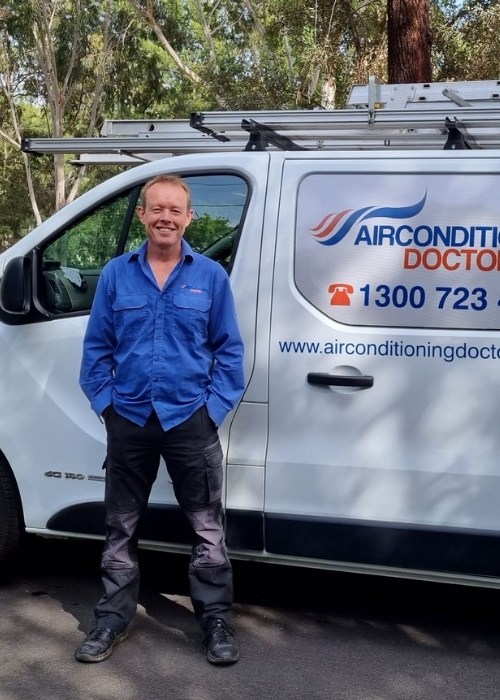
Stephen Maitland is the Director of Air Conditioning Doctor and has over 20 years of experience in the refrigeration and air conditioning industry. He founded the company in 2007 to be Adelaide’s leading air conditioning repair, replacement and installation specialist.
As a certified Refrigeration Mechanic with a full unrestricted ARC license, his technical knowledge and years of experience allow him to diagnose problems quickly and offer practical and efficient solutions for his customers.
